

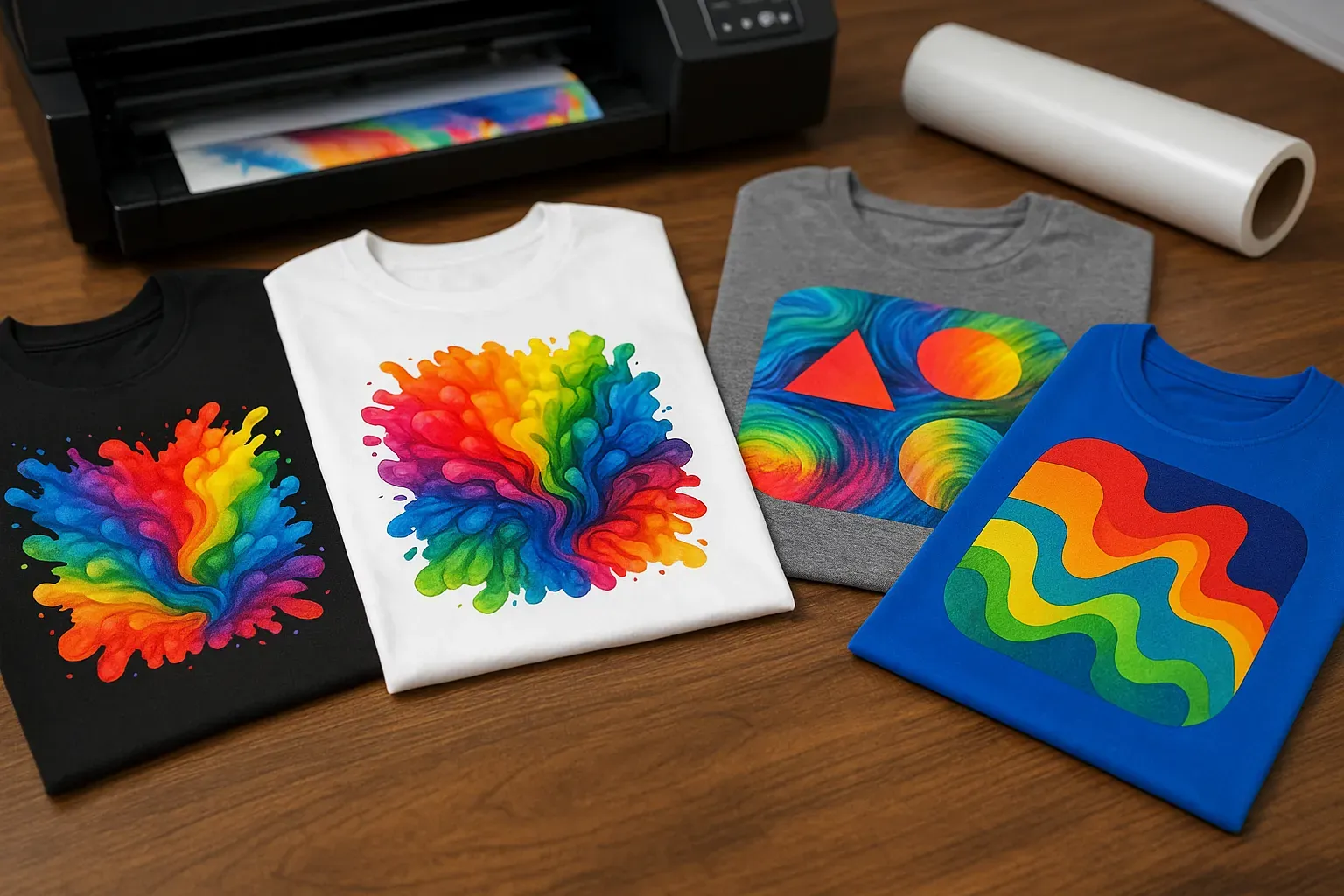
Vibrant DTF Prints are redefining how apparel communicates color and texture, delivering bold visuals, crisp details, and durable clarity across a wide range of fabrics. This guide blends practical DTF printing tips with a focus on DTF color management, helping designers navigate inks, transfer films, substrate variability, and consistent production workflows from concept to finished garment. By tuning the underbase, refining solid fills, and considering texture, you can achieve vibrant results that withstand washing, abrasion, and daily wear. A well-structured workflow—from monitor calibration to appropriate curing, finishing, and quality checks—helps sustain color integrity and deliver market-ready prints. Whether you’re launching a new line or upgrading a catalog, focusing on color, fill, and texture will set your designs apart and drive customer satisfaction.
Vibrant DTF Prints: Core Principles of Color Management
Color management is the backbone of consistently bold apparel, and it begins with careful calibration of your monitor and printer. By using reliable ICC profiles for your printer and ink set and soft-proofing designs before printing, you can align on-screen color with the final transfer. This approach supports Vibrant DTF Prints by preserving hue, saturation, and detail from concept to garment, even when working across different fabrics and transfer films.
Create a workflow that embraces a wide color gamut and precise conversion to the printer’s working space, and keep a color log for each batch. Subtle substrate shifts can alter hue, so tailoring profiles to fabrics and films is essential. Regular testing and documentation reduce color variability and ensure that the Vibrant DTF Prints you envision are what customers see on their garments.
DTF Color Management: Tools, Profiles, and Calibration Practices
Effective DTF color management relies on fabric-specific ICC profiles, proper soft-proofing, and establishing a repeatable device calibration routine. Build or obtain profiles for each fabric type and transfer film you use, and use those profiles to guide color decisions during design and print prep. This foundation helps achieve consistent, vivid output and supports the broader goal of reliable DTF color management.
Regularly calibrate your monitor and printer, maintain accurate working spaces, and document ink density and transfer parameters. Soft-proof designs to anticipate how colors will render on the target substrate, and keep a log of test results to reproduce successful vibrancy across jobs. With disciplined calibration, you’ll produce more reliable Vibrant DTF Prints across batches.
DTF Fill Techniques: Achieving Solid Areas with No Banding
Solid fills demand precise ink deposition and thoughtful trapping. Incorporate nesting to prevent gaps between adjacent colors, and use a well-calibrated white underbase to boost vibrancy on dark fabrics. Employs strategies from DTF fill techniques to control density and edge definition, ensuring strong color blocks without banding.
Manage ink density in your RIP or design software to balance color depth with drying time and edge sharpness. For large color blocks, consider staggered or varied dot patterns to reduce visual fatigue and improve smoothness. By applying these DTF fill techniques, you preserve detail and deliver uniform vibrancy across complex motifs.
Texture Effects and Detail: Building Tactile Depth in DTF
Texture in DTF is a product of ink, transfer film, curing, and fabric interaction. Higher print resolutions yield finer texture, while selective halftone arrangements can create subtle tactile patterns that enhance depth. Understanding DTF texture effects helps you design for touch as well as sight.
Finishing choices—like gloss sealer, matte, or soft-touch finishes—can dramatically alter hand feel while preserving color fidelity. Layering color with strategic transparency lets you reveal or conceal details, adding dimension without sacrificing clarity. Treat texture as a deliberate design element to achieve Vibrant DTF Prints with tactile richness.
Substrates, Pre-Treatment, and Curing: The Hidden Drivers of Vibrancy
Fabric choice dramatically affects color clarity and brightness. Cotton, cotton blends, and poly-blend jerseys each respond differently, so testing pre-treatment formulas helps optimize adhesion and color payoff. The base content emphasizes that pre-treatment can boost vibrancy and wash durability, making it a key factor in DTF printing tips.
Consider weave, fiber content, and light absorption when selecting substrates—lighter fabrics often yield brighter results, while darker fabrics may require stronger underbase performance. Curing is essential to lock color and prevent outgassing that dulls vibrancy; follow recommended dwell times and temperatures for your ink and transfer film to avoid edge softening or color shifts after washing.
A Practical DTF Printing Workflow for Consistent Vibrant Results
Design with color intent from the outset, using soft-proofing and test layouts on fabrics similar to your production. Establish clear color targets and reference swatches, and integrate trapping and clean outlines to support smooth transfers. This DTF printing tips mindset helps set up a repeatable process that yields consistent Vibrant DTF Prints.
Prepare files for film transfer by ensuring vector paths are clean and edges crisp, then optimize print settings for ink density and underbase strength tailored to the fabric. Implement a stable curing protocol and a consistent heat-press approach to ensure uniform transfer. After each run, inspect color accuracy, fill uniformity, and texture, and log results to guide future projects for reliable vibrancy.
Frequently Asked Questions
What are Vibrant DTF Prints and what makes them stand out?
Vibrant DTF Prints describe direct-to-film transfers that deliver bold, saturated color and crisp detail on a range of fabrics. Achieving them hinges on coordinated factors: high-quality inks and transfer film, a strong white underbase, compatible fabrics, proper curing, and a solid software workflow. When these elements align, you’ll produce Vibrant DTF Prints that resist washing and daily wear.
What are essential DTF printing tips to maximize color, depth, and consistency?
DTF printing tips begin with solid color management: calibrate your monitor and printer, use ICC profiles, and soft-proof designs before printing. Use the right color space and fabric- and film-specific ICC profiles, and tune ink density and underbase in your RIP. Keep test prints and a color log to reproduce vibrant, consistent results.
How does DTF color management affect vibrancy across fabrics?
DTF color management is the backbone of consistent, vivid output. Calibrate devices, use fabric-specific ICC profiles, and soft-proof designs to minimize hue shifts. Documenting test prints and batch variations helps ensure Vibrant DTF Prints look the same on cotton, blends, and poly fabrics.
What fill techniques help achieve solid color blocks without banding on DTF prints?
DTF fill techniques focus on trapping, proper white underbase opacity, and controlling ink density. Manage dot patterns and print resolution to prevent gaps and edge halos, and stagger large color blocks for smoother transitions. A well-tuned fill preserves detail and maintains Vibrant DTF Prints across large areas.
How can you add texture effects to DTF prints without sacrificing detail?
DTF texture effects can be created by choosing appropriate print resolution and halftone patterns, selecting transfer film and adhesive that match the desired hand, and using finishing options (gloss, matte, or soft-touch). Layering color and selective transparency lets you add tactile depth while preserving sharp edges and overall clarity.
What is a practical workflow to reliably produce Vibrant DTF Prints from design to finish?
A practical workflow starts with color intent and soft-proofing, then prepares clean design files with precise outlines. Optimize print settings (ink density, underbase, color profiles) for the fabric, perform controlled curing, and verify hand feel and adhesion. Maintain a results log to ensure repeatable Vibrant DTF Prints from project to project.
| Topic | Key Points | Notes / Practical Tips |
|---|---|---|
| Understanding what makes DTF prints pop | DTF transfers pigment inks from a PET film onto fabric using a bonding agent and heat; produces full-color imagery with smooth gradients and crisp details. Vibrant results depend on coordinating inks, transfer film, white underbase, fabric substrate, curing, and software workflow. | When these elements align, you get Vibrant DTF Prints that resist washing, sunlight, and daily wear. |
| DTF color management | Calibrate monitor and printer; use reliable ICC profiles; soft-proof designs. Start with a wide color gamut (Adobe RGB or printer gamut) and convert to the printer’s working space with an accurate profile. Create ICC profiles for fabric and transfer film. Run test prints and keep a color log. | Reduces color shifts and helps ensure Vibrant DTF Prints appear as intended. |
| Fill techniques | Solid fills require precise ink deposition. Tips: trapping and nesting to prevent gaps; use appropriate white underbase opacity; manage ink density in RIP; print at an optimal resolution; staggered or varied dot patterns for large blocks. | Improves surface uniformity and edge definition for Vibrant DTF Prints. |
| Texture and detail | Texture comes from ink, film, curing, and fabric interaction. Higher resolution yields finer texture; transfer adhesion affects hand; finishing (gloss, matte) changes hand and perception; layering color and transparency builds texture without sacrificing clarity. | Texture should enhance design while preserving color fidelity and print clarity. |
| Substrates, pre-treatment, and curing | Fabric choice (cotton, blends, poly-blends) affects color and clarity. Pre-treatment boosts adhesion and color payoff. Weave/fiber content influences light absorption. Curing locks in color; follow recommended dwell times and temperatures. | Well-chosen substrate and proper curing sustain vibrancy across wear and washes. |
| Practical workflow | Design with color intent; soft-proof; clean vector paths; optimize print settings; build a record of successful settings; print and cure with controlled temperature and dwell times; inspect and adjust after first pass. | A repeatable workflow reduces trial-and-error and ensures consistent Vibrant DTF Prints. |
| Troubleshooting | Color shifts between runs: recalibrate, adjust ICC profiles, check substrate batch variability. Banding: reduce ink density, increase passes, adjust dot gain. Faded colors after washing: verify curing. Peeling/adhesion: review pre-treatment and transfer parameters. Cracked/stiff texture: adjust cure, coating thickness, or finish. | Methodical checks maintain vibrancy and durability of DTF designs. |
| Quick-start checklist | Calibrate monitor/printer; install fabric ICC profiles. Design with color intent; ensure trapping and clean outlines. Use proper white underbase and optimized ink density. Print at high but efficient resolution; choose film/adhesive suitable for substrate. Cure accurately; test swatches. Keep a log and adjust workflow. | Guides consistent production of Vibrant DTF Prints. |
Summary
Table summarizes core concepts for achieving Vibrant DTF Prints: from understanding the print pop and color management to fill Techniques, texture, substrates, workflow, troubleshooting, and a practical quick-start checklist.