

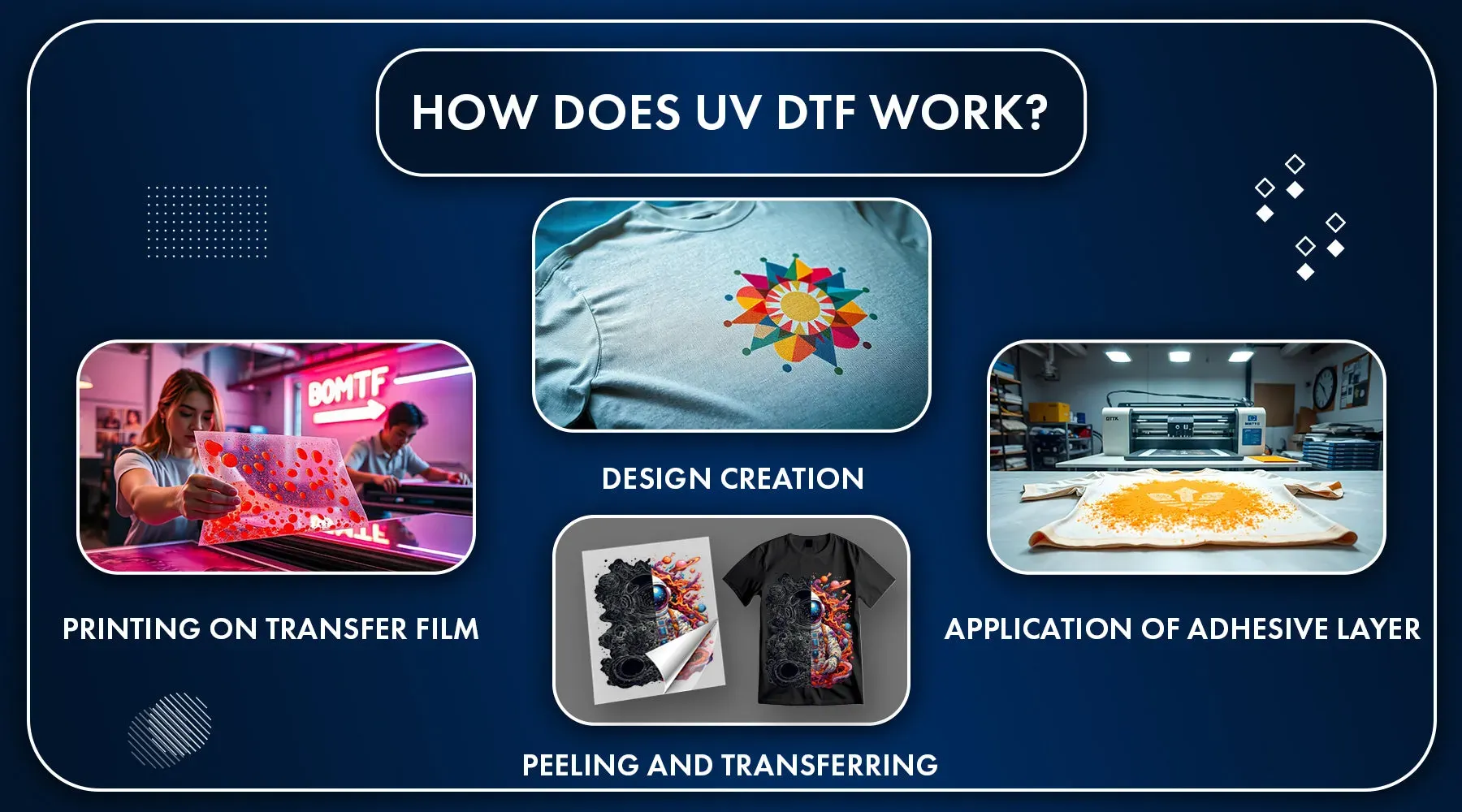
UV DTF transfer marks a breakthrough in print production, enabling vibrant color reproduction and precise detail across a wide range of substrates by combining UV-activated inks with the reliability of Direct-to-film transfer. At the heart of this technology are photoinitiators for UV inks that trigger rapid polymerization when exposed to light, enabling fast cure times in UV DTF printing. The UV curing process must be precisely controlled to balance color fidelity, adhesion, durability, and wash resistance, ensuring consistent performance whether the print is applied to performance fabrics, signage, or coated surfaces. Equally important is DTF film quality, which influences edge definition, gloss uniformity, and transfer yield as the cured layer moves from the carrier to the substrate, with high-quality films improving release and minimizing defects. Together, these interdependent factors drive reliable, repeatable results in Direct-to-film transfer workflows, supporting scalable production and consistent color accuracy across formats, including garments, signs, and promotional items, while minimizing waste and speeding time-to-market when lamp matching, cure dosing, and film selection are properly aligned.
In other words, this technology can be described as UV-activated ink-on-film transfer, where a UV-curable resin is printed onto a transparent carrier and backed into substrate using heat and pressure. Another way to frame it is as photoinitiated polymerization on a film-backed substrate, a process common in UV-LED textile printing and digital transfer workflows. Viewed through an LSIs lens, you might call it ultraviolet-initiated direct-to-film imaging, a method that combines curable inks, a robust carrier film, and controlled curing to deliver durable graphics. Regardless of the label, the critical factors remain the same: precise lamp wavelength, suitable photoinitiator systems, film compatibility, and calibrated heat and time for reliable adhesion.
Understanding UV DTF Transfer: Chemistry, Ink, and Carrier
UV DTF transfer uses UV-curable inks printed onto a transparent transfer film, then bonded to a substrate through heat and pressure. The science behind this process hinges on three pillars: photoinitiators embedded in the UV ink, a carefully controlled UV curing process, and the quality of the transfer film that carries the design. When these elements align, printers achieve vibrant color, sharp detail, and durable adhesion across textiles, signage, and other coated surfaces. This is the essence of UV DTF printing as a practical manufacturing method, rooted in chemistry and material science.
In Direct-to-film transfer workflows, the carrier film is not a mere carrier but a critical component that affects edge fidelity, gloss, and durability. The interaction between the cured ink and the film determines how cleanly the image transfers under heat and pressure. By understanding the coupling of chemistry (photoinitiators and resins), optics (film clarity), and mechanics (temperature and pressure), engineers and printers can optimize overall performance from color brightness to wash resistance.
Photoinitiators for UV Inks: Selecting a System for Fast, Reliable Curing
Photoinitiators for UV inks are the spark that starts polymerization when exposed to light. Choosing between Type I (cleavable) and Type II (co-initiator) systems affects cure speed, color balance, and the printer’s tolerance to lamp variability. A robust UV DTF printing formulation often blends both types to balance rapid curing with stable long-term performance, ensuring crisp details and minimal yellowing over time.
The spectral match between the lamp and the photoinitiator absorption range is essential. A well-muited photoinitiator system improves cure depth, gloss, and color accuracy, while controlling off-odor and potential off-flavor in the case of certain coatings. Concentration and distribution of photoinitiators influence edge definition and resistance to fading, so formulation must be tuned to the ink’s viscosity, substrate absorption, and desired production speed.
The UV Curing Process: Dose, Wavelength, and Ink Film Interaction
Curing is the step that turns liquid, photoinitiator-activated resin into a solid polymer network. Key parameters include wavelength, dose, and the interaction with the ink film thickness. LED-based systems often operate in the 395–405 nm range, and the applied dose (measured in mJ/cm²) must be calibrated to achieve full cure without embrittlement. Proper dosing ensures color fidelity and robust adhesion on diverse substrates.
The interaction between cure depth, film thickness, and oxygen inhibition shapes the final performance. Very thin, pigmented layers cure quickly but may require higher lamp intensity to reach full hardness, while thicker layers demand longer exposure. The transfer film’s properties also influence how uniformly the ink cures; a high-quality film helps transmit light evenly and reduces surface inhibition, contributing to consistent edge definitions.
DTF Film Quality: Why the Carrier Determines Edge Definition and Durability
DTF film quality directly impacts fine details, gloss, and durability of the final print. Attributes such as optical clarity, surface smoothness, and consistent release properties determine how accurately a design transfers from the film to the substrate. A clear, uniform film minimizes halos and provides crisp edges, which is especially important for high-detail elements and small type.
Ink compatibility and coating uniformity on the transfer film influence color stability and cure efficiency. If the film’s release properties are inconsistent, edges may lift or ghost after heat application. Selecting a film designed for UV inks, with stable adhesion and predictable release under heat and pressure, helps maintain repeatable results in production settings.
Direct-to-Film Transfer in Practice: From Printing to Substrate Across Textiles and Signage
Direct-to-film transfer describes printing onto a transfer film, then applying heat and pressure to move the design onto textiles, signs, or coated surfaces. The success of this process relies on a well-mursed balance of UV DTF printing parameters, strong film quality, and reliable adhesion promoters. When executed correctly, this method yields vibrant color, sharp edges, and durable performance suitable for apparel, sportswear, and retail signage.
Practical guidelines emphasize coordinated tuning of photoinitiator systems, cure doses, and film selection. Substrate-specific calibrations, like adjusting hand feel and color saturation for polyester versus cotton blends, are essential. Regularly testing adhesion on representative fabrics and ensuring the transfer film’s compatibility with the chosen inks helps reduce issues such as edge lift, color drift, or delayed cure.
Troubleshooting and Optimization for UV DTF Printing: Common Issues and Solutions
Even with careful planning, issues can arise in UV DTF printing. Common symptoms include under-cured edges, white halos around fine details, and color drift after washing. Solutions often involve adjusting the cure dose, selecting a more compatible photoinitiator system, or improving film release characteristics to prevent edge lift and ghosting.
A systematic approach to optimization includes documenting the lamp spectrum, dose, and substrate responses for each color family. Regularly evaluating DT F film quality, verifying ink dispersion, and testing adhesion on targeted fabrics help identify the root cause of problems. With a coordinated tuning of photoinitiators for UV inks, curing parameters, and film selection, printers can achieve durable, color-accurate UV DTF prints across a range of substrates.
Frequently Asked Questions
What is UV DTF transfer and why is it important for textiles and signage?
UV DTF transfer uses UV-curable inks printed onto a transparent transfer film and then bonded to a substrate with heat and pressure. The process relies on photoinitiators and a controlled UV curing process to polymerize the resin into a durable, color-rich layer. When film quality is high and the cure is properly controlled, you get sharp edges, good wash resistance, and long-lasting results on textiles, signage, and other coated surfaces.
How do photoinitiators for UV inks influence UV DTF printing quality and cure speed?
Photoinitiators for UV inks are the key triggers that start polymerization when exposed to UV light. Type I and Type II systems affect cure speed, color and gloss, and how well the ink adheres to the transfer film and substrate. For UV DTF printing, matching the lamp spectrum and initiator package to the ink formulation is essential for consistent color fidelity and reliable throughput.
What is the UV curing process in a UV DTF transfer, and how does it affect adhesion and durability?
During the UV curing process, lamp wavelength and energy dose drive solidification of the UV ink on the transfer film. Factors such as ink thickness, oxygen inhibition, and film interaction influence cure depth and surface hardness, which in turn affect adhesion and durability of the UV DTF transfer after transfer. The result is a crosslinked network that resists water, abrasion, and chemicals.
Why is DTF film quality critical for the final results of the UV DTF transfer?
DTF film quality directly affects how faithfully the cured image transfers. Clarity and surface smoothness enable crisp edges, while ink compatibility and release properties prevent edge lift and color drift. A high-quality film reduces pinholes, halos, and lift during the heat-and-press transfer, improving final UV DTF transfer results.
What practical steps optimize Direct-to-film transfer results, including lamp spectrum, cure dose, and substrate selection?
To optimize Direct-to-film transfer results, start by selecting a photoinitiator system that matches your UV lamp, then calibrate cure dose with a dosimeter for each substrate. Control ink layer thickness, test on representative fabrics or materials, and verify film compatibility. Finally, validate adhesion, durability, and color fidelity through small-scale tests before full production.
What are common issues in UV DTF transfer related to film quality and curing, and how can they be troubleshooted?
Common UV DTF transfer issues include white or hazy edges, cracking after washing, color drift, and poor adhesion. Likely causes are under- or over-curing, film with poor release, or substrate incompatibility. Remedies: increase or optimize cure dose, switch to a more compatible film, adjust ink formulation or use a stabilizer, and run substrate-specific tests to ensure reliable adhesion.
| Aspect | Key Points | Impact / Notes |
|---|---|---|
| What is UV DTF Transfer and Why It Matters? |
|
Sets the baseline for color fidelity and durability; informs choices about inks, film, and curing setup. |
| Photoinitiators in UV Inks |
|
Choosing a initiator system affects cure performance and final print quality. |
| The Curing Process |
|
A properly cured layer yields a durable, color-faithful, flexible print. |
| DTF Film Quality |
|
Films influence edge sharpness, color fidelity, and print durability. |
| System Integration |
|
A holistic approach yields more consistent, repeatable results. |
| Practical Optimization |
|
Guided, repeatable improvements across substrates and colors. |
| Troubleshooting Common Issues |
|
Common causes linked to cure, film, and adhesion variables; targeted remedies improve outcomes. |
| Real-World Applications |
|
Demonstrates practical value and breadth of UV DTF transfer in production. |