

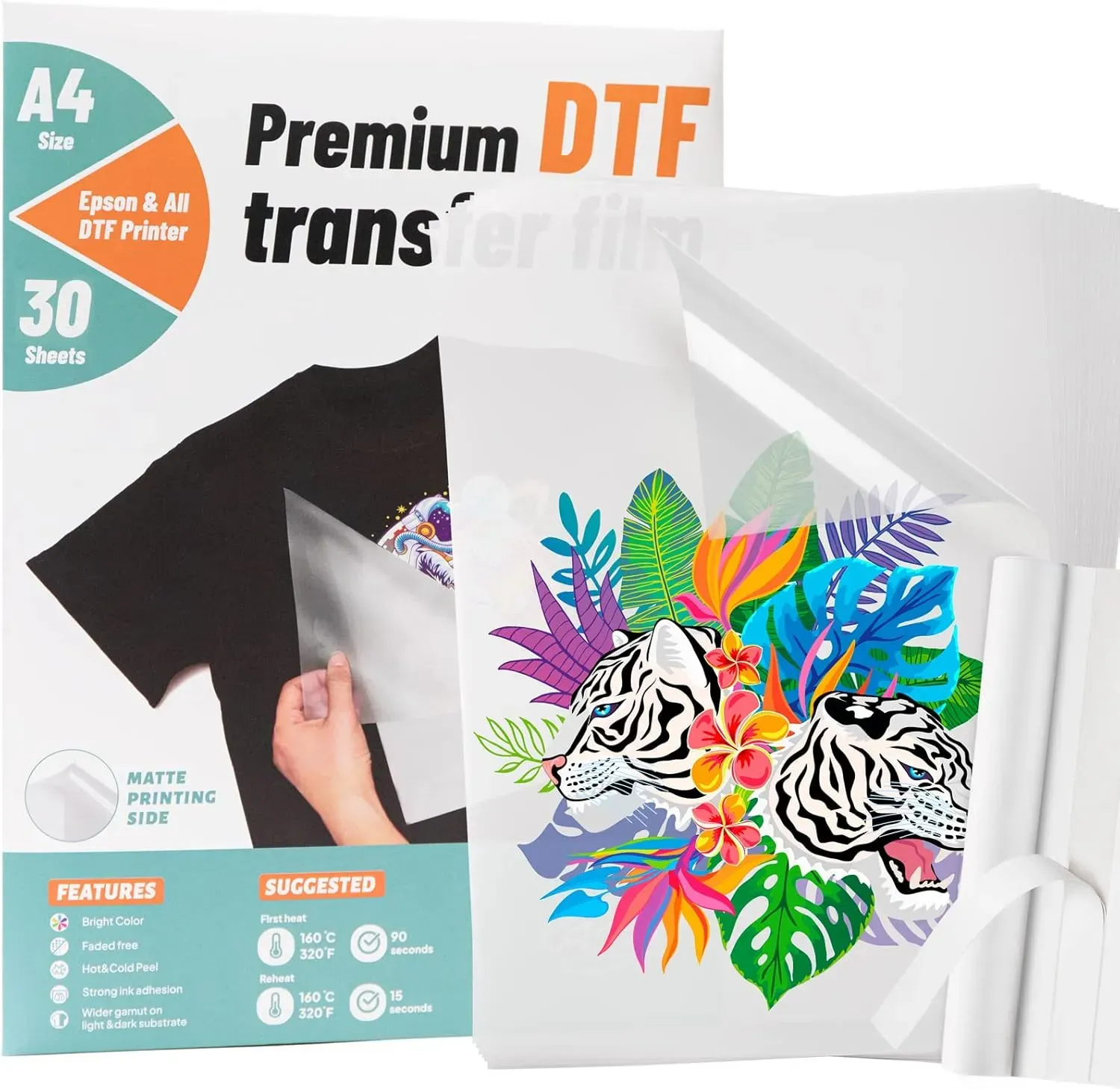
DTF transfer films are at the heart of the rapidly growing Direct-to-Film printing method, delivering vibrant, durable designs for apparel and textiles. Understanding DTF film types, coating quality, and DTF film costs helps designers and shop owners choose the right approach for different fabrics and production goals. This guide explains how DTF transfers work with the film layer, outlining the factors that influence DTF transfer quality and color fidelity. By considering ink compatibility, adhesive powder performance, and optimal press parameters, you can optimize results while maintaining efficiency. Whether you’re printing on light or dark garments, selecting the right DTF film types and weighing DTF vs traditional heat transfer options matters for reliable, scalable results.
Viewed through another lens, these display-ready film carriers support image transfer from printed media to textiles in a digital-to-fabric workflow. The concept of DTF transfer films can also be described as film-based transfer media used with powdered adhesives to secure designs on cotton, blends, and synthetic fabrics. These transfer sheets enable vibrant color reproduction and wash durability, with performance influenced by surface coating, ink compatibility, and the chosen finish. When evaluating options, shops often compare the cost per sheet, the compatibility with white inks for dark fabrics, and the overall transfer quality to meet customer expectations.
DTF film types explained: tailoring DTF film types to fabrics and finishes
DTF film types come in a variety of coatings, finishes, and compatibilities, and choosing the right option can dramatically affect color accuracy and adhesion. Standard DTF films offer broad compatibility for many fabrics, while white-ink compatible films are designed to preserve solid white areas on dark garments. Glossy finishes tend to boost brightness and edge sharpness, whereas matte finishes provide a softer hand feel and subtler visual impact. Specialty films expand possibilities for glitter effects, light fabrics, or textured textiles, though they may require specific printers or settings.
Understanding the nuances of DTF film types helps you align your film choice with your design goals and fabric types. Practical testing across your most common garments—dark and light fabrics alike—will reveal how each film type handles color density, edge detail, and hand feel. By documenting results, you can build a reliable catalog of DTF film types that consistently meet your production standards.
DTF transfer quality factors: film coating, thickness, and ink compatibility
DTF transfer quality is influenced by several interacting factors, with film coating and thickness at the top of the list. A consistent coating ensures reliable ink absorption and release during transfer, while the thickness can affect adhesive thickness, transfer feel, and durability. Too thick a film may hinder smooth release, whereas too thin a film can compromise color vibrancy and longevity.
Ink compatibility and adhesive powder quality are also critical to transfer quality. The film must work with your DTF ink system—whether pigment inks, white ink, or any primers—and the adhesive powder must melt evenly to bond the image to fabric. When these elements align, you’ll see sharper images, more accurate color reproduction, and longer-wear designs across multiple wash cycles.
DTF film costs: budgeting from entry-level to premium films
DTF film costs vary by thickness, coating quality, brand, and order quantity. Entry-level or economy films price per sheet lower, but they may demand stricter process control to achieve consistent results. Standard films balance cost and performance for typical daily production, while premium or specialty films command higher prices but can yield improved adhesion and sharper image fidelity on challenging fabrics.
To manage costs effectively, consider your typical order size, fabric variety, and daily press cycles. Buying in bundles or reels can reduce per-sheet costs, though you must account for storage, shelf life, and compatibility with your printer workflow. A practical strategy for many shops is a mix of standard and premium films to maintain reliability across a broad range of projects while keeping budgeting predictable.
How DTF transfers work: from design to finished garment
How DTF transfers work begins with planning a design, then printing it onto the DTF film using CMYK inks—and often white ink for opacity on dark fabrics. The printed film forms the carrier that will later carry the image to the garment. This initial printing step sets the stage for accurate color reproduction and edge clarity before any powder is added.
Next comes powdering, curing, and pressing. An adhesive powder is applied evenly to the printed surface and then melted with heat to bond the image to the fabric during transfer. After pressing, the carrier film is peeled away and the design remains on the garment, sometimes followed by a final pressing step to improve bonding and wash durability.
DTF vs traditional heat transfer: key differences in color, durability, and workflow
DTF transfer films enable a broader color range and sharper details, especially on dark fabrics when white ink is used, compared with many traditional heat transfer methods. The ability to reproduce vibrant colors with good opacity often results in clearer images and more consistent results after multiple washes.
In terms of workflow and upfront costs, DTF can offer shorter setup times for certain runs and be more economical for small to mid-size batches. However, the initial investment in compatible printers, powders, and films can be higher than some traditional methods. Understanding these tradeoffs helps you decide which transfer approach best fits your production goals.
Practical testing and selection: building an empirical process using DTF film types
A practical, data-driven approach starts with testing several DTF film types across your most common fabrics. Track color accuracy, adhesion, hand feel, and wash results over a standard number of cycles. This empirical testing helps you rank films by performance and select a durable set of options for your catalog.
Documenting results across fabrics and designs creates a reproducible workflow that reduces reprints and returns. As you accumulate data, you can refine your catalog of DTF film types, align your selections with production goals, and optimize for both cost and quality, ensuring consistent, high-quality outcomes for customer orders.
Frequently Asked Questions
What are the main DTF film types and how do I choose the right one for my project?
DTF film types include standard DTF films, white-ink compatible films, glossy and matte finishes, and specialty films for glitter, light fabrics, or textured textiles. When selecting, consider the fabric color, ink system, desired hand feel, and wash durability. Testing swatches helps assess how film types affect opacity, edge sharpness, and color brightness.
How does DTF transfer quality relate to the choice of DTF transfer films?
Transfer quality depends on film coating and thickness, ink compatibility, adhesive powder quality, and transfer dynamics. Choosing the right DTF transfer films ensures reliable ink release, consistent adhesion, sharp edges, and durable washes. Poor compatibility or improper thickness can cause color shifts, cracking, or uneven transfers.
What are typical DTF film costs and how should I budget for films?
Costs vary by film type and brand. Entry-level films offer lower upfront cost per sheet but may require tighter process control. Standard films balance price and performance, while premium films deliver better adhesion and image fidelity for challenging fabrics. Consider bundles or reels for lower per-sheet costs, but plan storage and workflow compatibility; mix standard and premium films to match project mix.
How do DTF transfers work, and what role do DTF transfer films play in the process?
A DTF transfer starts with printing on the film with CMYK inks (and white ink if needed), applying adhesive powder, curing, then pressing the film onto the garment with heat and pressure. After cooling, the carrier film is peeled away. The film acts as the carrier that carries ink and melts the adhesive to bond to fabric; film quality affects edge clarity, color brightness, and durability.
DTF vs traditional heat transfer: which is best for my project in terms of film types and transfer quality?
DTF generally offers a broader color range, sharper details, and better durability on many fabrics, especially with white-ink capable films for dark garments. Traditional heat transfer can be cheaper upfront but may crack or peel over time. Film types influence results—glossy vs matte finishes change look and hand feel. For many shops, DTF is more economical for small-to-mid runs due to lower setup and reprint costs, though equipment costs can be higher.
How can I evaluate DTF transfer film quality before buying for my shop?
Use a practical checklist: inspect coating uniformity and thickness; verify ink compatibility with your printer and inks; test adhesive powder melting and bond strength; assess finish and edge sharpness; run wash-test swatches to gauge durability; perform pilots on your typical fabrics to compare results across films.
| Aspect | Key Points |
|---|---|
| What are DTF transfer films? | Specialized PET sheets that carry printed imagery for transfer to fabrics using heat and pressure. They act as carriers, enabling vibrant colors, good wash durability, and compatibility with a wide range of fabrics, including dark garments when using white ink. |
| DTF film types: what to know | Common variants include standard films, white-ink compatible films, glossy vs. matte finishes, and specialty films for glitter, light fabrics, or textured surfaces. |
| Quality considerations | Film coating/thickness, ink compatibility, adhesive powder quality, transfer dynamics (heat/pressure/dwell time), and proper post-transfer finishing all influence consistency and durability. |
| DTF film costs and budgeting | Costs depend on thickness, coating quality, brand, and quantity. Pricing is tiered (entry-level, standard, premium). Consider order size, bundle savings, and mix of standard/premium films for balance. |
| Choosing DTF film types for a project | Factor in fabric color/content, desired color intensity and detail, finish preference (glossy vs matte), durability expectations, and production scale/budget. Practical testing on representative fabrics is recommended. |
| How DTF transfers work in practice | Design/print the image on film, apply adhesive powder, cure, press onto fabric to transfer, then peel the carrier and finalize with a finishing press if needed. |
| Common pitfalls | Inconsistent ink density, uneven powder application, poor adhesion on certain fabrics, and improper post-transfer handling can reduce quality and durability. |
| DTF vs. traditional heat transfer | DTF offers broader color range and detail, improved durability with proper processing, greater process flexibility, and potentially higher upfront investment in printers, powders, and films. |