

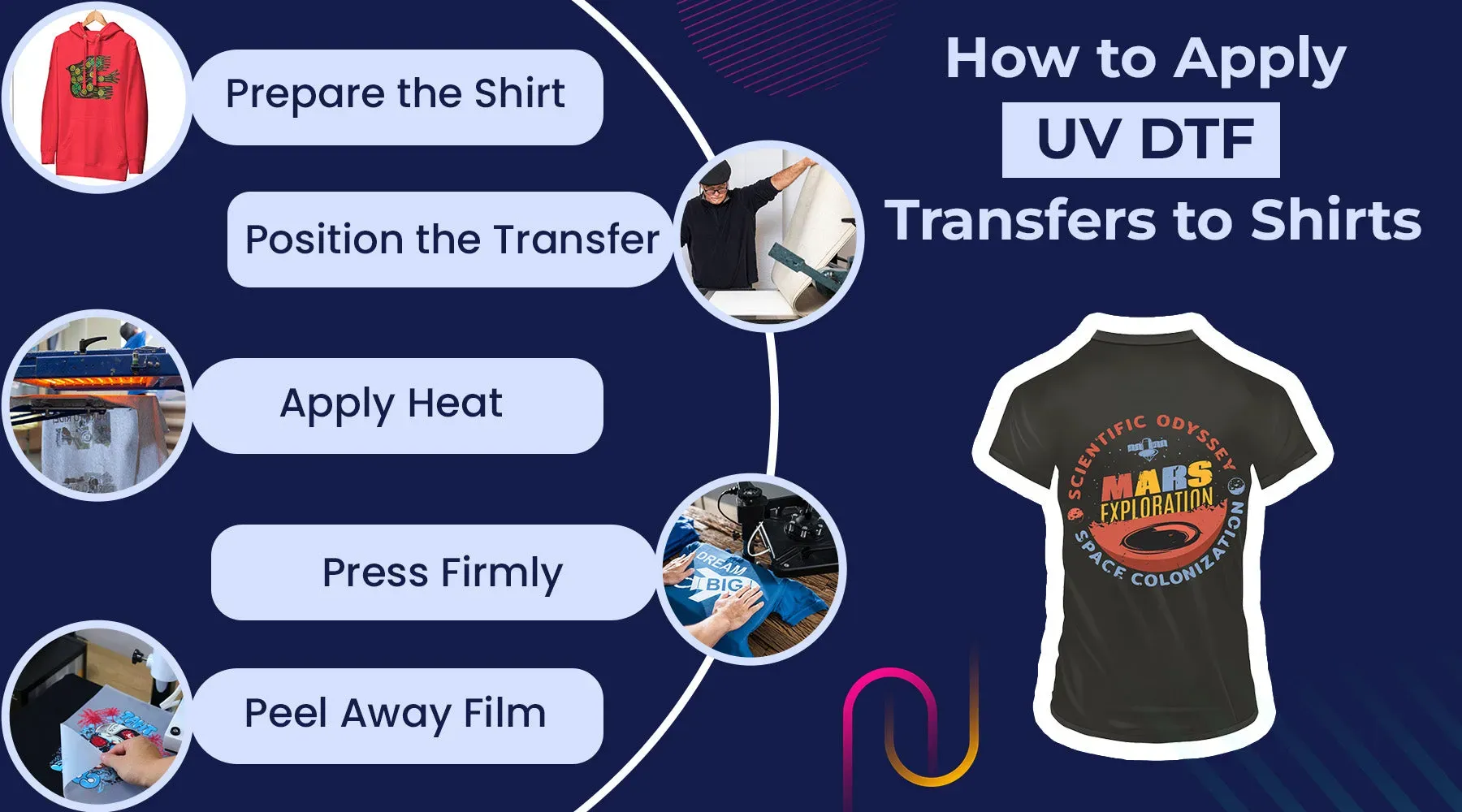
UV DTF transfer technology is transforming how designers and manufacturers approach garment decoration. By combining direct-to-film printing with UV-curable DTF ink curing, brands can achieve vibrant colors, excellent flexibility, and durable adhesion across a wide range of fabrics. To ensure reliability, the guide covers DTF transfer adhesion testing and explains how to measure adhesion, curing, and post-processing. Practical tests like peel test DTF simulate real-world stresses such as washing and bending, helping quantify adhesion performance. This overview highlights adhesion of UV DTF prints, DTF printing adhesion, and how to optimize ink-to-film and film-to-fabric bonding for durable, high-quality transfers.
Viewed through an alternate lens, this approach blends UV-activated inks on a transfer film with heat and pressure to decorate textiles. Key considerations include how well the printed layer bonds to the transfer film, how completely the ink cures, and how securely the final image adheres to the garment. LSI-friendly terminology includes UV-curable pigment inks on release media, film-to-fabric bonding, and wash-fast durability across fabrics. Optimizing these factors means balancing ink thickness, curing energy, and fabric pretreatment to improve consistent adhesion and overall performance. Regular adhesion-based checks and cross-substrate comparisons help teams forecast real-world wear and drive repeatable production quality.
1. Understanding UV DTF Transfer: Core Elements and Performance
UV DTF transfer combines direct-to-film printing with UV-curable inks to create vibrant, durable prints that can be transferred to a wide range of fabrics. The three core elements—ink-to-film adhesion, film-to-fabric adhesion, and ink-to-fabric adhesion—drive the long-term performance of the finished transfer. When any of these bonds is weak, issues like cracking, delamination, or color loss can occur after washing or regular wear.
Exploring these components through an LSI lens means considering related concepts such as DTF printing adhesion and adhesion of UV DTF prints, alongside practical testing approaches like peel tests and cross-cut assessments. By framing UV DTF transfer performance around these adhesion, curing, and testing signals, designers and manufacturers can better predict durability across Substrates and production conditions.
2. DTF Printing Adhesion: Ink-to-Film, Film-to-Fabric, and Ink-to-Fabric Bonds
DTF printing adhesion hinges on three interconnected bonds: ink-to-film, film-to-fabric, and ink-to-fabric. Each bond contributes to overall transfer reliability, influencing how the printed ink remains anchored to the film, how the film adheres to fabric during heat and pressure, and how well the cured ink stays bonded to the fabric over time.
In practice, improving DTF printing adhesion involves optimizing ink formulations, film release properties, and fabric surface energy. Testing for adhesion of UV DTF prints, using procedures aligned with adhesion testing protocols, helps quantify performance and guides adjustments in curing, ink thickness, and substrate preparation. This holistic view supports consistent results across substrate families and production lots.
3. UV-Curable DTF Ink Curing: Achieving Maximum Color and Durability
Curing is the process of transforming liquid UV-curable resins into a solid network, which locks in color, enhances chemical resistance, and improves abrasion durability. For UV DTF inks, curing efficiency depends on lamp type (LED vs. mercury-vapor), lamp intensity, exposure time, and the distance between the lamp and the print. The substrate also plays a role, particularly for thicker or multi-pass ink deposits.
Proper curing must balance complete cross-linking with the flexibility needed for stretch fabrics. Incomplete curing can leave residual monomers that weaken adhesion, while over-curing can embrittle the print. Optimizing UV-curable DTF ink curing requires aligning lamp output, exposure strategy, and substrate characteristics to achieve robust DTF printing adhesion without sacrificing hand feel or color vibrancy.
4. DTF Transfer Adhesion Testing: Peel Test DTF and Beyond
Adhesion testing is essential for validating UV DTF transfer performance. Peel tests, in particular, measure the force required to peel the transfer away from the substrate, offering a quantitative gauge of overall adhesion strength. Observations during the peel give insight into where failures are likely to occur—ink-to-film, film-to-fabric, or ink-to-fabric.
A comprehensive testing approach also includes cross-cut tests and real-world simulations to observe how coatings respond to washing, bending, and abrasion. For UV DTF, peel test DTF results are especially informative because they mimic everyday stresses—laundry cycles and wear—and help establish acceptance criteria across substrates, ink film thicknesses, and curing conditions.
5. Substrate, Ink, and Cure Interactions: Optimizing DTF Printing Adhesion Across Fabrics
Substrate preparation and surface energy management are critical for consistent DTF printing adhesion. Cleaning, pre-treating, and selecting compatible fabrics influence film-to-fabric adhesion and the ultimate ink-to-fabric bond. Ink film thickness and deposition uniformity also affect adhesion outcomes, particularly on challenging substrates such as synthetics or performance fabrics.
Optimizing DTF printing adhesion requires a holistic view of curing compatibility with the substrate. Matching ink chemistry, film release, and transfer adhesive properties with fabric type ensures robust performance. Considering DTF transfer adhesion testing results during process setup helps maintain consistent adhesion levels across production batches and varying substrate families.
6. Optimization, Standards, and Future Trends for UV DTF Transfers
From the lab to high-volume production, establishing standardized testing and acceptance criteria is essential for reliable UV DTF transfers. Regularly scheduled peel testing, supported by a statistical sampling plan, ensures that DTF transfer adhesion testing remains a living metric across substrates and ink lots. These practices help teams monitor consistency and drive continuous improvement.
Emerging trends in UV DTF include LED-curing systems for energy efficiency and precise control, enhanced pretreatment protocols for difficult fabrics, and standardized methodologies for apples-to-apples comparisons. Focus areas also include optimizing cross-linking chemistry to improve durability without sacrificing flexibility, reducing VOC emissions, and advancing more robust建议 peel test DTF protocols to guide future process validation.
Frequently Asked Questions
What is UV DTF transfer and why is adhesion critical for its performance according to DTF transfer adhesion testing?
UV DTF transfer combines direct-to-film printing with UV-curable inks, producing vibrant color on fabrics. Adhesion across ink-to-film, film-to-fabric, and ink-to-fabric layers drives durability, wash resistance, and color retention. Adhesion testing, including peel test DTF, provides a standardized metric to gauge bond strength and identify where failures may occur in real-world use.
How does UV-curable DTF ink curing affect the adhesion of UV DTF prints, and how can you optimize cure parameters for better DTF printing adhesion?
UV-curable DTF ink curing hardens the ink, increasing cross-link density and improving adhesion to both the film and fabric. Proper curing enhances solvent resistance, abrasion resistance, and colorfastness, while under- or over-curing can weaken adhesion of UV DTF prints. Optimize lamp type (LED vs. traditional), intensity, exposure time, and distance to match the substrate and ink formulation for consistent DTF printing adhesion.
What is a peel test DTF, and why is it a good measure of adhesion for UV DTF transfer?
A peel test DTF measures the force required to peel the transfer from the substrate, providing a direct metric of overall adhesion strength in a UV DTF transfer. This test simulates real-world stresses like washing and bending, helping assess ink-to-film, film-to-fabric, and ink-to-fabric adhesion. Interpreting results against a defined specification supports reliable UV DTF transfer performance across substrates.
How can you optimize DTF printing adhesion on different fabrics for UV DTF transfer?
Focus on substrate preparation, surface energy, and ink film thickness to improve DTF printing adhesion across fabrics. Tailor pre-treatments and curing parameters to each substrate family (cotton, blends, synthetics) to strengthen adhesion of UV DTF prints without sacrificing flexibility. Regular adhesion testing helps validate adjustments across substrate types.
What common pitfalls affect adhesion of UV DTF transfers, and how can adhesion testing help identify them?
Common issues include under-curing, over-curing, inconsistent ink deposition, and inadequate substrate preparation, all of which can weaken adhesion of UV DTF transfers. DTF transfer adhesion testing, including peel tests and cross-cut assessments, helps pinpoint whether failures stem from the ink, film release, or fabric interaction, guiding corrective actions.
What steps comprise a lab-to-production plan to ensure consistent adhesion in UV DTF transfer, including peel tests and cure checks?
Develop substrate-specific specifications and calibrate the curing system (lamp type, intensity, exposure, distance) to achieve reliable UV-curable DTF ink curing. Implement a routine peel test DTF program to monitor adhesion across batches and substrates, and standardize substrate preparation and ink deposition. Use DTF transfer adhesion testing as a ongoing quality gate to maintain consistent adhesion of UV DTF transfers.
| Aspect | Key Points |
|---|---|
| What UV DTF Transfer is | UV DTF transfer combines UV-curable inks printed on a transfer film and applied to fabrics with heat and pressure, enabling vibrant color, flexible hand feel, and durable adhesion. |
| Core elements | Three pillars drive performance: adhesion (ink–film, film–fabric, ink–fabric), curing of UV inks, and peel tests to verify transfer durability. |
| Adhesion importance | Adhesion is the mutual attraction between layers; weak bonds can cause cracking, peeling, or washout during laundering or wear. |
| Ink-to-film adhesion | Bond between UV inks and the transfer substrate; insufficient ink–film adhesion can lead to early delamination before transfer. |
| Film-to-fabric adhesion | Transfer must release from film and then adhere to fabric under heat/pressure during transfer. |
| Ink-to-fabric adhesion (post-transfer) | Cured ink must remain bonded to fabric after transfer to ensure durability and wash resistance. |
| Adhesion testing | Peel tests, cross-cut tests, and related protocols quantify adhesion strength; peel-test DTF is especially relevant for simulating real-world stresses. |
| Peel testing in practice | Mount the sample, apply a calibrated pull at a fixed angle (e.g., 90° or 180°) and speed, and record peak force and bond cleanliness. |
| Interpreting peel results | Higher peel strength generally indicates stronger adhesion, but compare against defined specifications and substrate context; inconsistencies suggest process variation. |
| Curing parameters impact | Lamp type and intensity, exposure time, distance, and substrate pre-treatment affect cross-link density, adhesion, and film flexibility; thicker layers may need longer or multiple passes. |
| Optimization strategies | Calibrate curing systems, tune ink thickness, control pot life, standardize substrate prep, implement routine peel testing, and validate any post-transfer steps to ensure consistency. |
| Common pitfalls | Under-cured inks, over-curing causing brittleness, inconsistent ink deposition, inadequate substrate prep, and incompatible heat settings can degrade adhesion and durability. |
| DTF vs UV-Curing synergy | Approach UV DTF as an integrated system where ink formulation, transfer film, adhesive, and cure parameters are tuned together for predictable adhesion and peel performance. |
| Future trends | LED-based curing, improved pretreatment protocols for difficult fabrics, standardized peel methodologies, sustainability considerations, and optimized ink usage for efficiency. |
Summary
UV DTF transfer is a powerful approach to garment decoration that combines direct-to-film printing with UV-curable inks to deliver vibrant color, flexibility, and durable adhesion across a broad range of fabrics. This deep-dive overview focuses on adhesion, curing, and peel tests as the three pillars of performance. Adhesion examines the bonds between ink and film, film and fabric, and ink and fabric, with peel tests and cross-cut tests used to quantify strength. Curing ensures the ink cross-links to form a stable, colorfast coating and depends on lamp type, intensity, exposure, distance, and substrate characteristics. Peel testing provides practical insight into how the transfer holds up under laundering, bending, and abrasion. By optimizing these parameters—adhesion, curing, and post-transfer handling—designers and manufacturers can achieve durable, vibrant UV DTF transfers suitable for diverse substrates and applications.